
Creating memorable kid-friendly events requires more than balloons and music—it demands thoughtful planning, engaging entertainment, and precise logistics. Families look for experiences that are safe, entertaining, and well-organized. To achieve this balance, every aspect, from activity selection to catering and venue setup, should be designed with children and parents in mind. Below, we present a comprehensive guide to hosting events that captivate young guests and provide parents with peace of mind.
Understanding the Needs of Kid-Friendly Events
When planning an event for children, the priorities differ significantly from adult-centered gatherings. Safety, entertainment variety, and convenience take center stage. Parents expect a secure environment where their children can enjoy activities without constant supervision, while kids crave fun, interactive experiences. A successful event strikes the right balance between these expectations, ensuring everyone leaves with lasting positive impressions.
Read: What Makes Kumberland Events Center Ideal for Outdoor Adventures and Celebrations
Choosing the Right Venue for Children’s Events
The venue forms the foundation of any kid-focused gathering. Key considerations include:
- Space for Movement: Children need open areas for games, crafts, and performances. Avoid venues that feel too cramped or restrictive.
- Safety Features: Rounded furniture edges, secure exits, and child-friendly layouts reduce risks.
- Accessibility: Families benefit from venues that are easy to reach, with ample parking and stroller-friendly entrances.
- Facilities: Restrooms equipped with changing stations and kid-sized amenities add comfort and practicality.
Selecting a venue that already caters to family events can minimize logistical challenges and provide a smoother experience for organizers.
Entertainment Options That Keep Kids Engaged
Entertainment is the heartbeat of a kid-friendly event. Children have short attention spans, so offering diverse activities is crucial. Popular entertainment ideas include:
- Live Performers: Magicians, clowns, puppeteers, and storytellers never fail to delight young audiences.
- Interactive Games: Bounce houses, carnival-style booths, scavenger hunts, and obstacle courses keep children active and engaged.
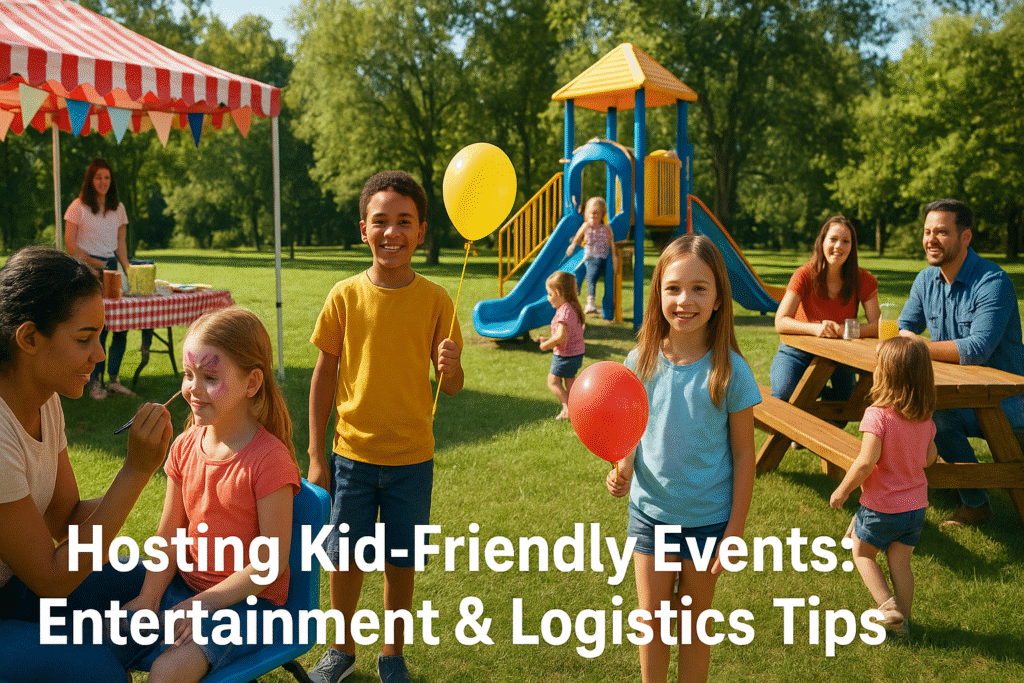
- Creative Corners: Art stations, DIY crafts, and face-painting spark imagination and provide souvenirs for kids to take home.
- Technology-Based Fun: Interactive screens, photo booths, or augmented reality experiences add a modern touch.
- Educational Shows: Animal exhibits, science demonstrations, or cultural performances provide learning opportunities wrapped in entertainment.
By diversifying activities, event hosts can cater to varying age groups and preferences, ensuring every child finds something enjoyable.
Logistics Planning for Smooth Execution
Behind the scenes, logistics determine whether an event feels seamless or chaotic. For children’s events, the following logistical elements are essential:
Check-In and Registration
A streamlined process reduces wait times and ensures families quickly transition into the fun. Digital check-in systems or pre-printed passes can help.
Crowd Flow Management
Design pathways that avoid bottlenecks, with clear signage to direct families between zones such as play areas, dining sections, and restrooms.
Catering
Food and beverages should be tailored to children’s preferences and dietary needs:
- Offer bite-sized, mess-free snacks.
- Provide allergy-friendly alternatives.
- Keep hydration accessible with water stations.
Safety Personnel
Trained staff or volunteers should monitor play zones, supervise inflatables, and manage crowd flow to prevent accidents.
Emergency Preparedness
Having a first-aid station, emergency contacts, and child-safety protocols reassures parents and enhances event credibility.
Read: Tent, RV, or Banquet—Choosing What’s Best for Your Event at Kumberland Events Center
Creating Themed Experiences That Spark Imagination
Themes elevate a basic event into an unforgettable experience. A well-chosen theme ties together décor, activities, and entertainment. Examples include:
- Adventure Themes: Jungle safaris, pirate treasure hunts, or superhero academies.
- Seasonal Celebrations: Holiday festivals, summer splash events, or back-to-school bashes.
- Educational Journeys: Space explorations, historical reenactments, or science fairs.
The key is consistency—ensuring every detail, from invitations to stage design, reflects the chosen theme. Children thrive in immersive environments that allow them to role-play and explore creatively.
Balancing Entertainment for Kids and Comfort for Parents
Kid-friendly events succeed when parents enjoy themselves too. Creating family zones with comfortable seating, Wi-Fi access, and refreshments allows adults to relax while children participate in activities. Offering supervised play areas or drop-off activity stations can also give parents some free time, making the event appealing to the entire family unit.
Incorporating Technology for Enhanced Engagement
Modern event planning leverages technology to enhance experiences. Mobile apps for event schedules, digital wristbands for child safety, and interactive games provide convenience and fun. QR codes can lead to activity maps, event rules, or photo galleries, reducing reliance on paper handouts while improving accessibility.
Marketing and Promotion of Kid-Friendly Events
Even the best event fails without strong attendance. Effective promotion strategies include:
- Targeted Social Media Campaigns: Highlight fun activities through vibrant images and videos.
- Parenting Groups and Forums: Share event details in communities where parents actively seek family-friendly activities.
- Schools and Daycare Centers: Partnerships help distribute flyers or digital invites to parents of potential attendees.
- Early Bird Discounts and Family Packages: Encourage advance bookings and boost attendance.
Word-of-mouth plays a powerful role; families who enjoyed past events become ambassadors for future gatherings.
Budgeting for Children’s Events
Managing finances wisely ensures event profitability without compromising quality. Major expenses typically include:
- Venue rental
- Entertainment and activity costs
- Catering and refreshments
- Décor and theming
- Staffing and security
Tracking expenses carefully and seeking sponsorships from child-focused brands can offset costs while adding value for attendees.
Read: Camping Meets Comfort: Wild Camping and Family Events at Kumberland Event Center
Sustainability in Kid-Friendly Event Planning
Families today value eco-conscious choices. Incorporating sustainable practices creates a positive impact and sets the event apart:
- Use biodegradable plates and cutlery.
- Offer digital tickets and maps instead of printed materials.
- Encourage recycling with kid-friendly sorting stations.
- Choose venues with energy-efficient infrastructure.
By modeling sustainability, events not only reduce their footprint but also educate children on the importance of environmental responsibility.
Post-Event Engagement
The event doesn’t end when families leave the venue. Following up strengthens brand loyalty and encourages repeat attendance:
- Photo Galleries: Share highlights online, giving parents memories to revisit.
- Feedback Surveys: Collect insights to improve future events.
- Exclusive Invitations: Offer early access or discounts for upcoming activities.
Maintaining communication builds a community around the event brand, turning one-time attendees into recurring participants.
Conclusion
Hosting kid-friendly events demands more than a checklist—it requires blending creativity, organization, and child-focused planning. From selecting safe venues to offering diverse entertainment, every detail contributes to an unforgettable experience. By prioritizing logistics, balancing parental comfort, and weaving in themes that inspire young imaginations, events can achieve the perfect mix of fun and functionality. The ultimate goal is simple: create moments that children cherish and families remember, setting a high standard for every future gathering.